Zendesk runs your service desk. AgenticCart runs your storefront.
These two cover different stages of the same customer. Zendesk is enterprise customer service: ticketing, routing, SLAs, voice, workforce management. AgenticCart is a conversational storefront for the half hour before someone becomes a customer at all.
Most of this page is detail. If you only read one part, read this one.
An AI agent resolves the question against your knowledge base and, if it cannot, routes it into a queue with the right skills. That is a well-designed service desk doing exactly its job.
There is no queue, because nothing needs resolving. Semantic search over the synced catalog returns jackets inside the budget as cards, and the shopper narrows by weight, colour or length in the same conversation.
| AgenticCart | Zendesk | |
|---|---|---|
| What it is built for | ||
| Product discovery from your product catalog | ||
| Recommendations as product cards, not links | ||
| Intent-based search, in 40+ languages | Multilingual replies, not catalog search | |
| Ticketing, queues, SLAs and voice | ||
| The selling surface | ||
| Runs as a full storefront on your own domain | ||
| Curated collections per agent | ||
| Catalog synced and embedded for search | ||
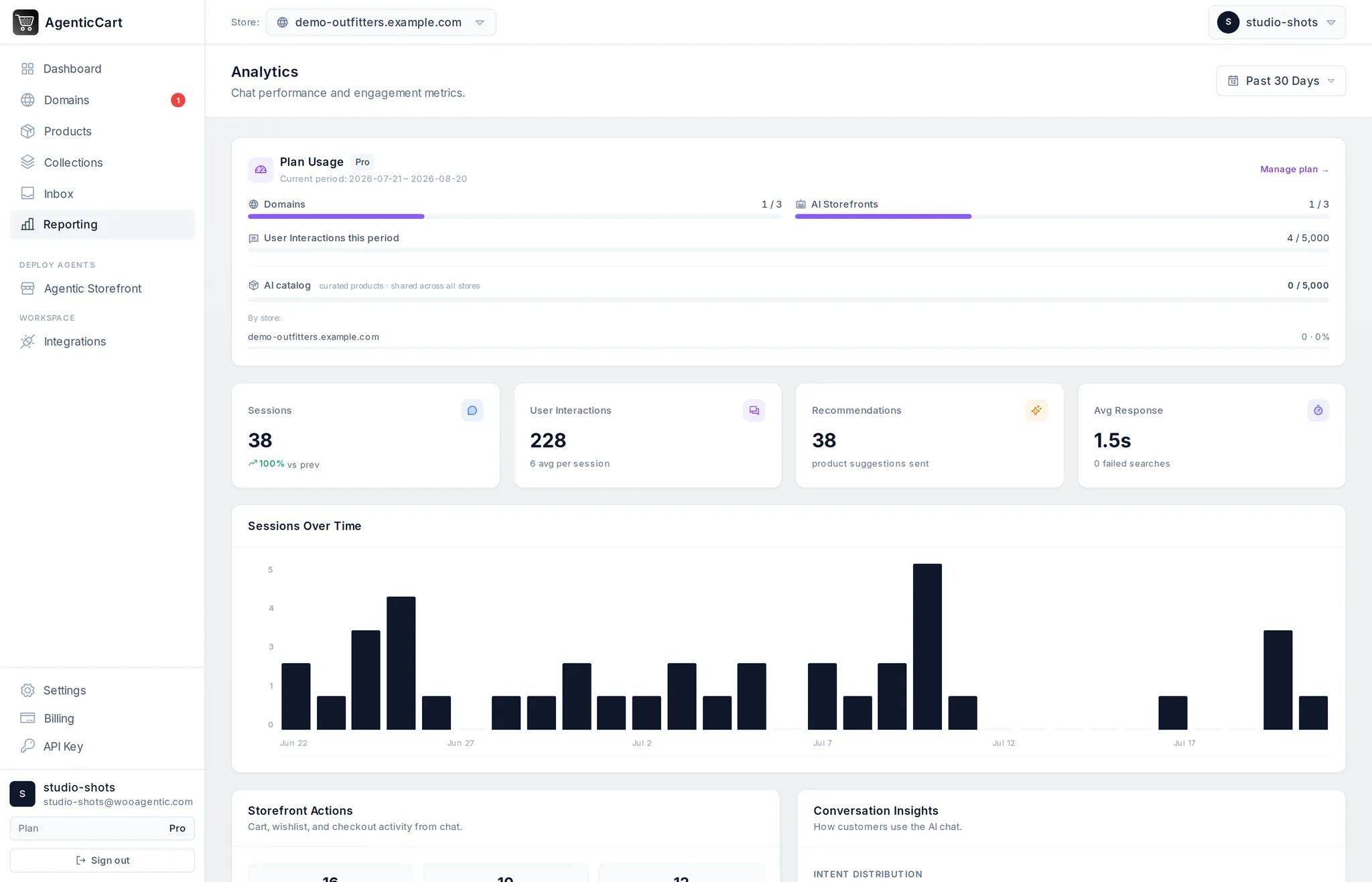
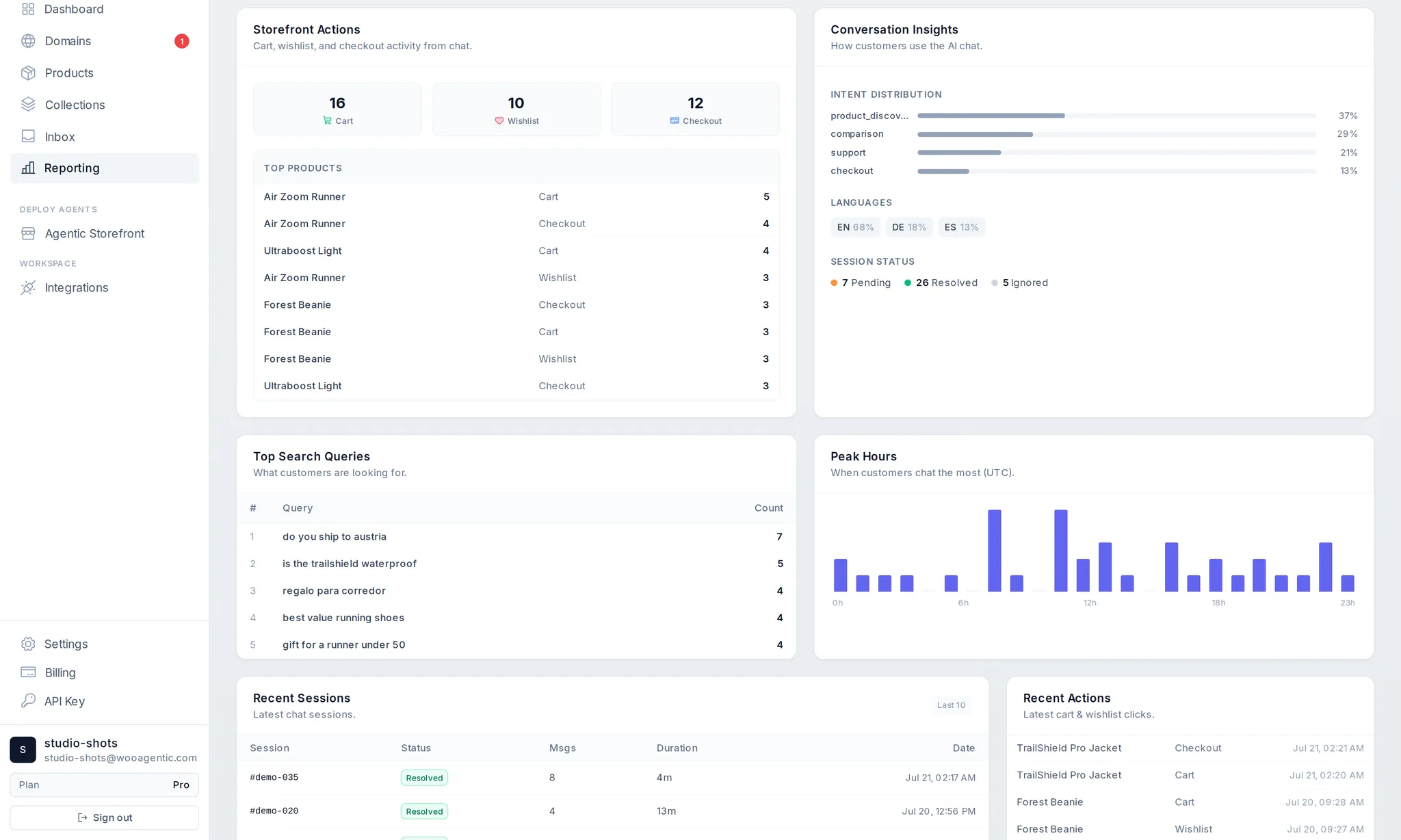
| Conversion and drop-off insight in shoppers' own words | Service desk reporting | |
| Commercials | ||
| Pricing model | Flat monthly | Per agent seat, plus AI resolutions |
| No per-seat pricing | ||
| Cost independent of team size | ||
Checked against Zendesk's own public pages in August 2026. Found something out of date? Tell us and we will fix it.
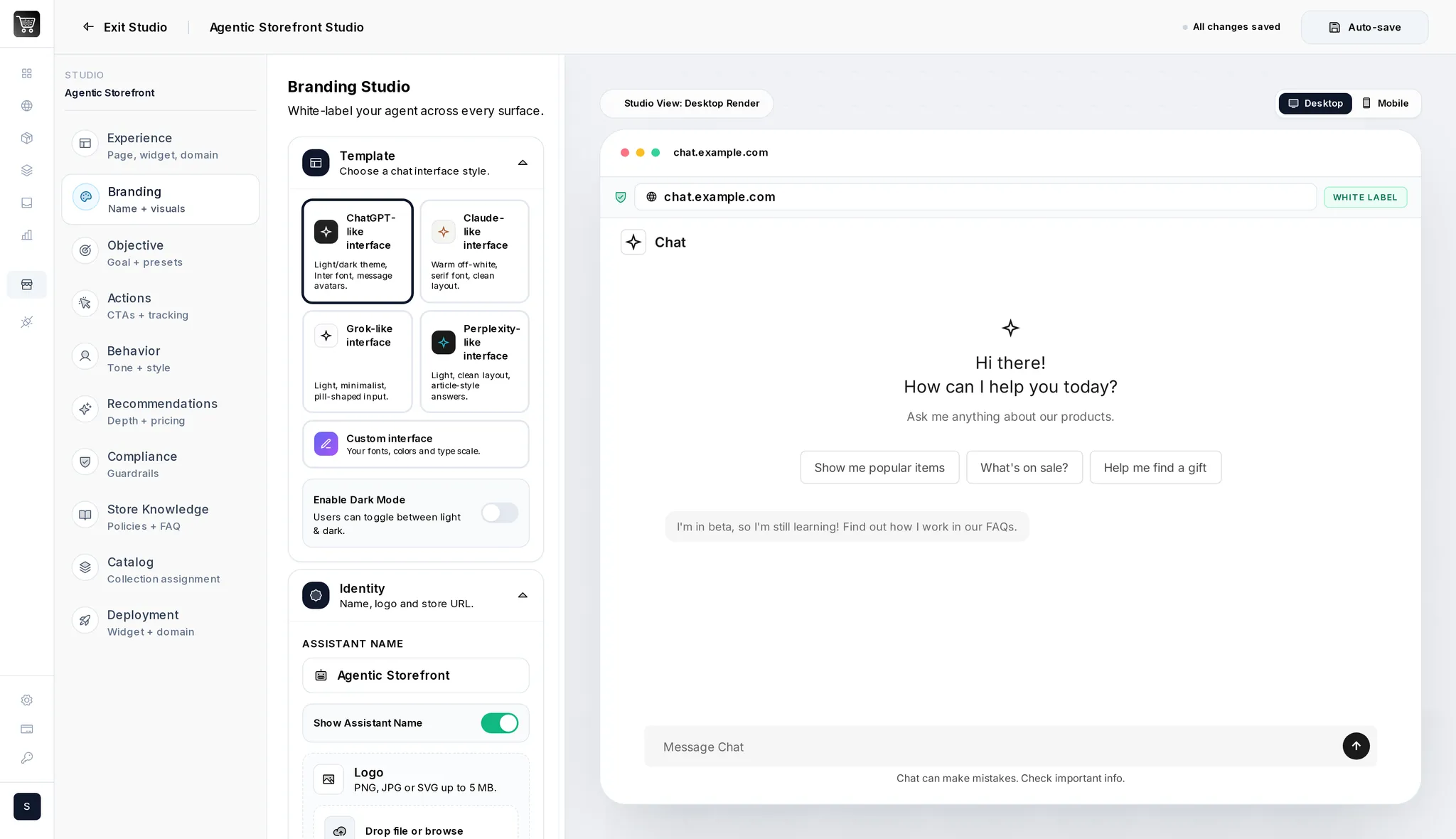
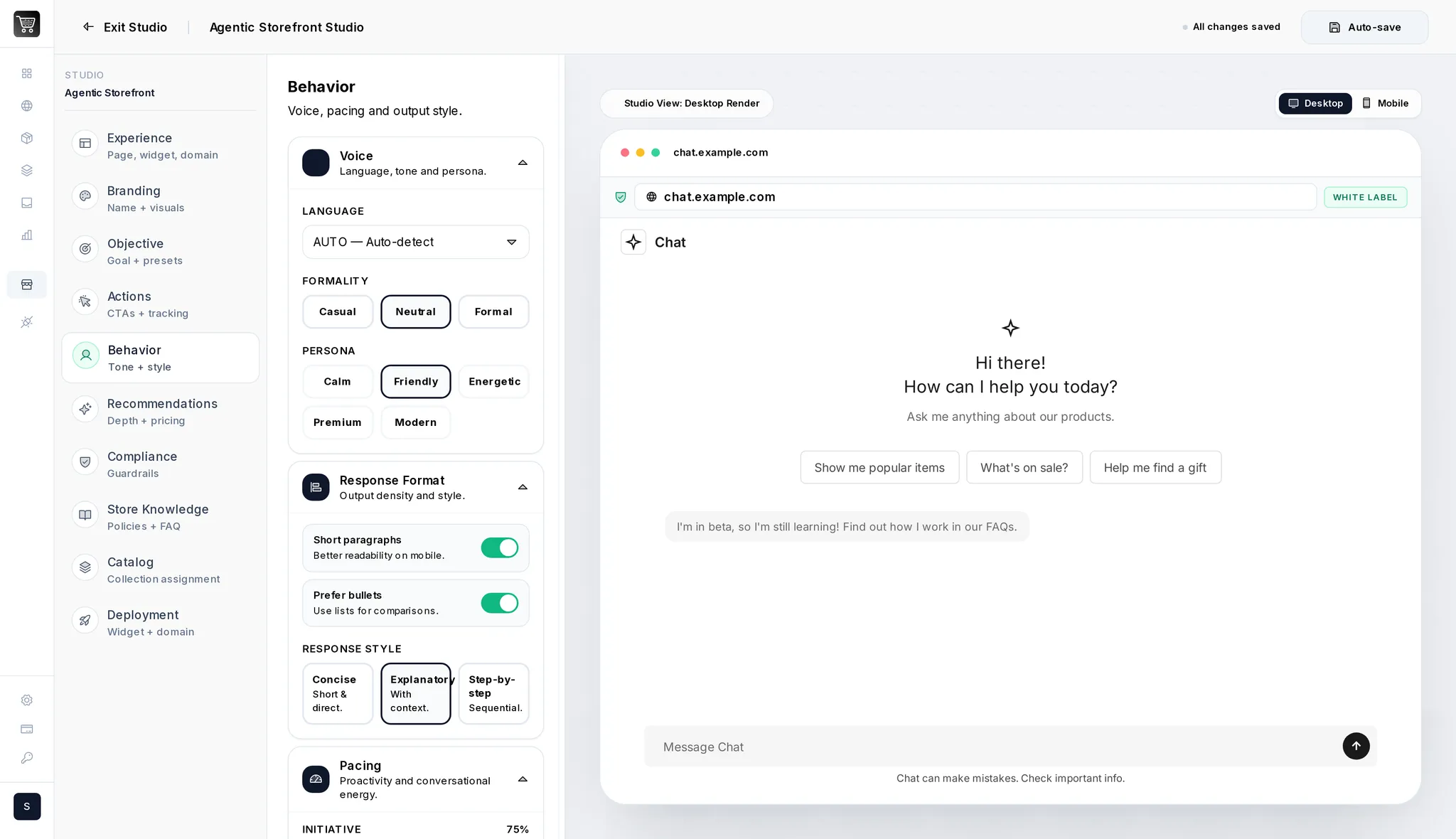
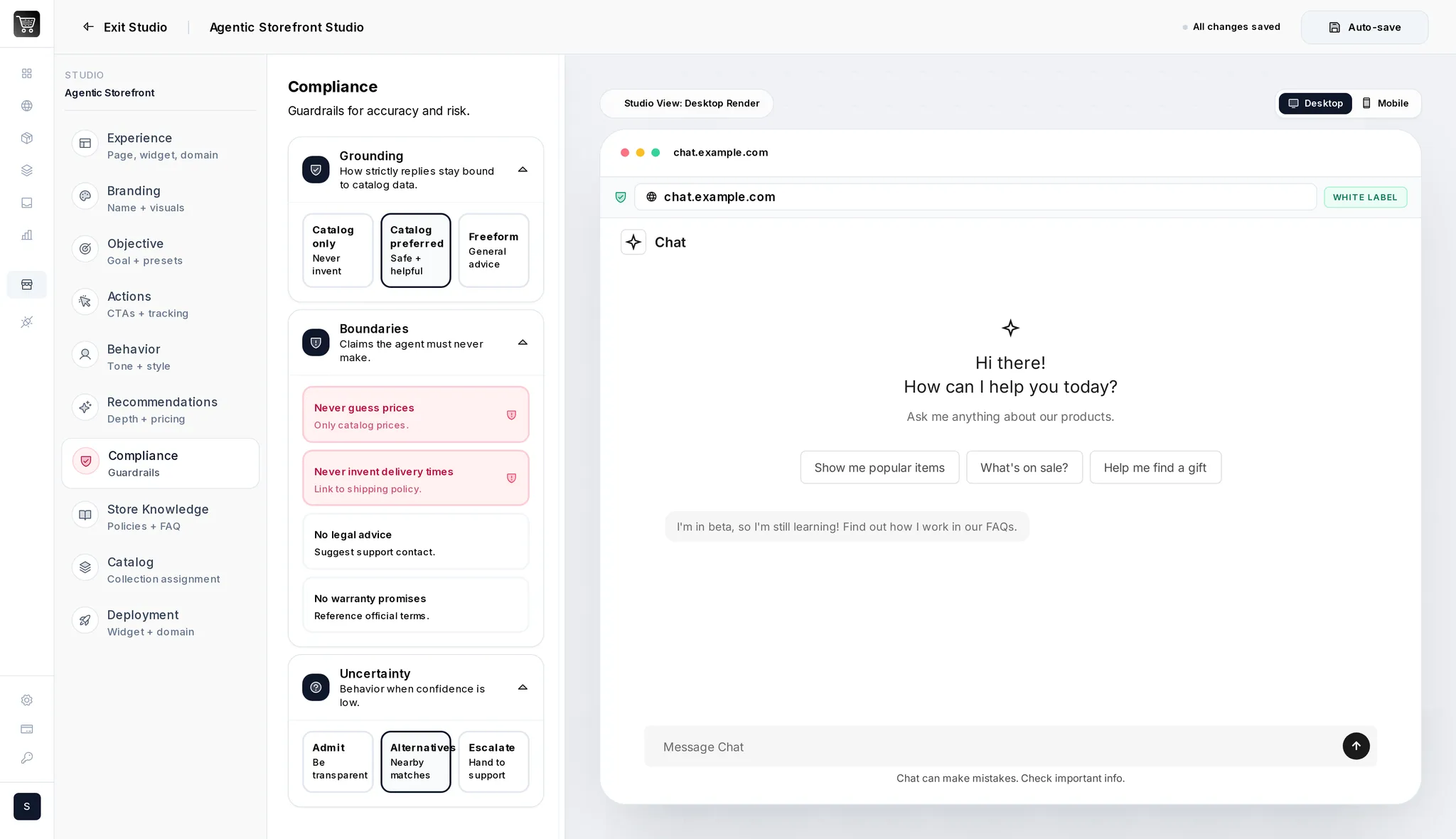
These are the real product: a hosted storefront answering a shopper, the Studio, the reporting. Click any of them to see the feature it belongs to.
Sold per agent per month, with a Copilot add-on priced per agent on top, and AI agents billed per successful automated resolution. Zendesk does not publish a per-resolution rate. Checked August 2026 on their pricing page.
A flat monthly price with an interaction allowance and no seats.
Cost scales with headcount, which is right for a service desk and irrelevant to a storefront agent that has none. The unpublished AI rate is the line to model before committing.
Zendesk is an enterprise-grade service desk, and that is a different category rather than a different opinion. Queues, SLAs, skills-based routing, voice, workforce management, multibrand, compliance and reporting are what it is built for, and if you need to run support at scale it is the right purchase. AgenticCart works the stage before support exists at all: the shopper who has not bought anything yet and cannot find the right product.
AgenticCart is a selling surface rather than a service desk, so it runs alongside whatever you already use for support. If the pre-purchase conversation is the gap, that is the part it covers, and the trial runs on your own catalog in a few minutes.
They solve different problems, so most teams keep their service desk and add AgenticCart for the selling conversation in front of it. If ticketing is what you are shopping for, Zendesk is built for exactly that.
Because plenty of people searching for support tooling are ecommerce teams whose bigger opportunity sits earlier: shoppers who cannot find the right product and leave without ever asking. That is the part AgenticCart covers, and it is worth knowing it is its own purchase.
Yes, with no integration between them. They touch different stages and different data: AgenticCart reads your product catalog, Zendesk owns your tickets and customer conversations.
That is not the axis we scale on. There are no agent seats in AgenticCart because there are no agents. It scales with catalog size and shopper conversations.
A flat monthly price per plan with an interaction allowance, and a 7-day free trial. No per-seat pricing.
Prefer the whole market at a glance? See the best AI agents for ecommerce, the best ecommerce chatbots, or start with what an AI storefront is.
See it on your own catalog
Connect your store and the agent answers questions about your own products in the browser. Most people decide right there.