Tidio answers questions. AgenticCart sells.
Both put a conversation on your store. Tidio is a live chat and helpdesk with an AI agent bolted on to deflect support tickets. AgenticCart is a storefront where the conversation is how people find and buy your products.
Most of this page is detail. If you only read one part, read this one.
A support agent searches its knowledge base for a matching article. With no article on gift ideas it falls back to a generic answer or hands the chat to a human.
Semantic search runs over your synced catalog, three products under 80 euros come back as cards with price and availability, and the shopper can ask "is the second one warm enough for winter?" as a follow-up.
| AgenticCart | Tidio | |
|---|---|---|
| What it is built for | ||
| Product discovery from your product catalog | ||
| Recommendations as product cards, not links | ||
| Intent-based search, in 40+ languages | Multilingual replies, not catalog search | |
| Support tickets, macros and agent routing | ||
| The selling surface | ||
| Runs as a full storefront on your own domain | ||
| Curated collections per agent | ||
| Brand, tone and hard guardrails you configure | Bot tone and rules | |
| Conversion and drop-off insight in shoppers' own words | Ticket and resolution reporting | |
| Commercials | ||
| Pricing model | Flat monthly | Per billable conversation |
| AI included, not a second meter | ||
| Cost stays flat as shoppers engage more | ||
Checked against Tidio's own public pages in August 2026. Found something out of date? Tell us and we will fix it.
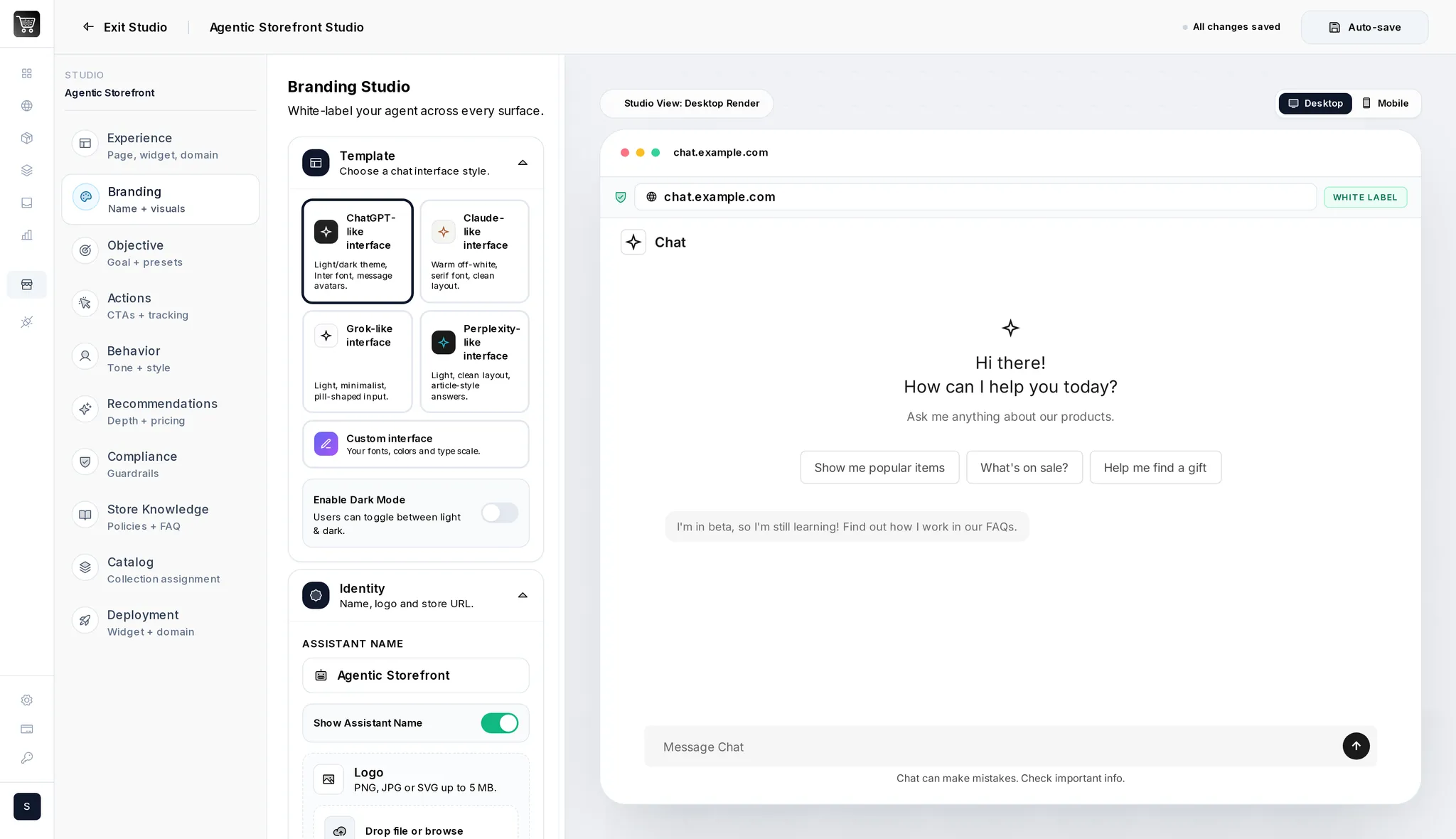
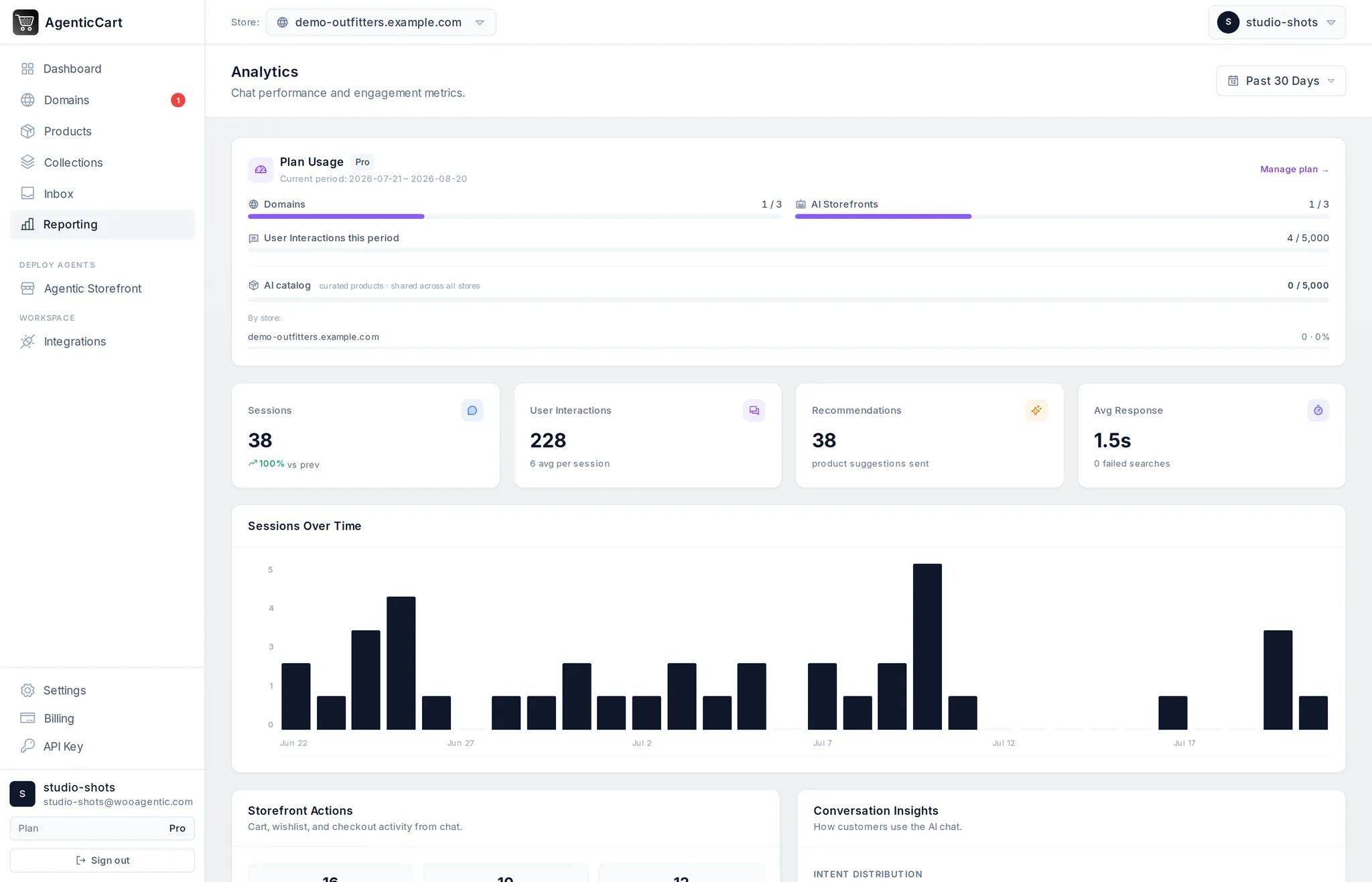
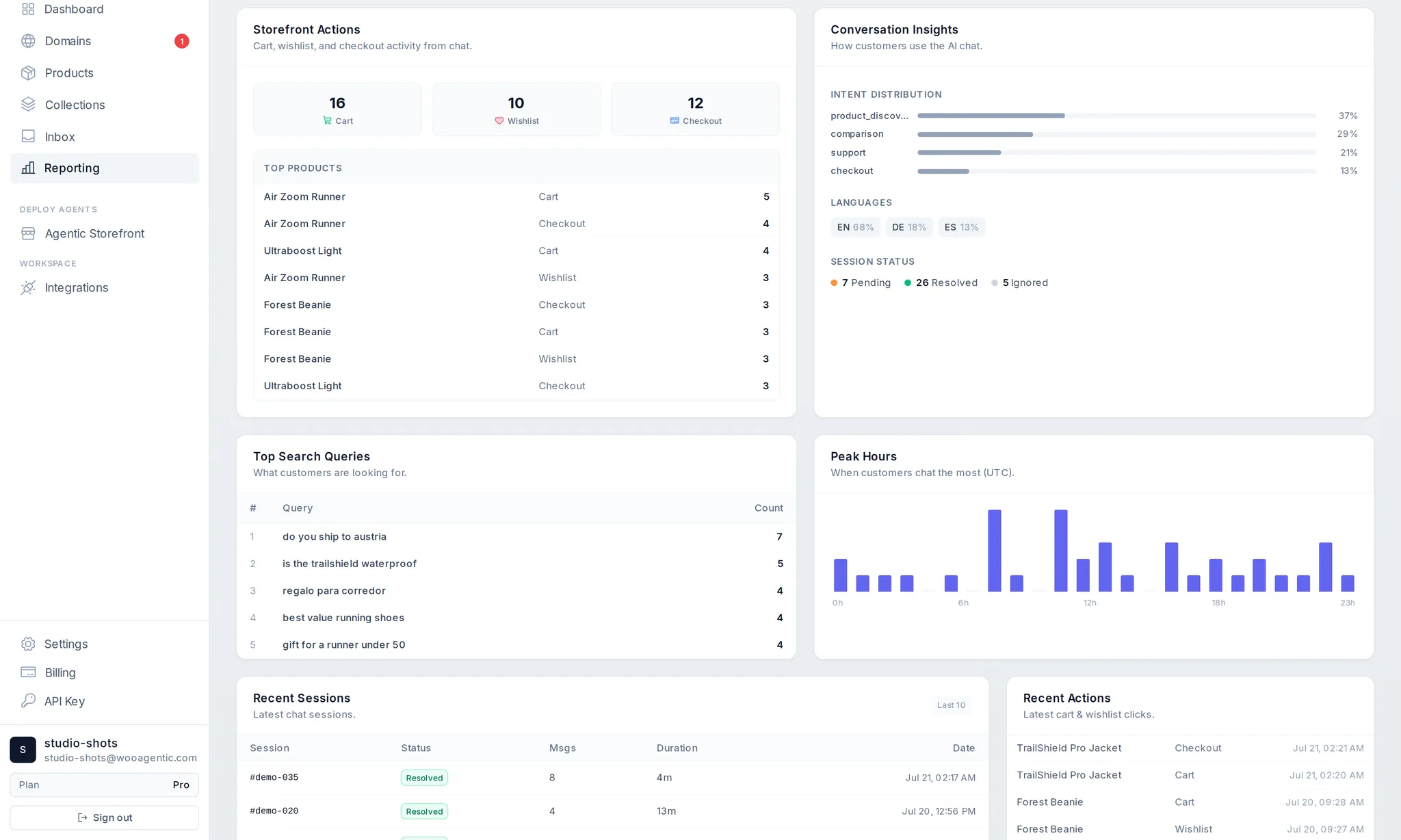
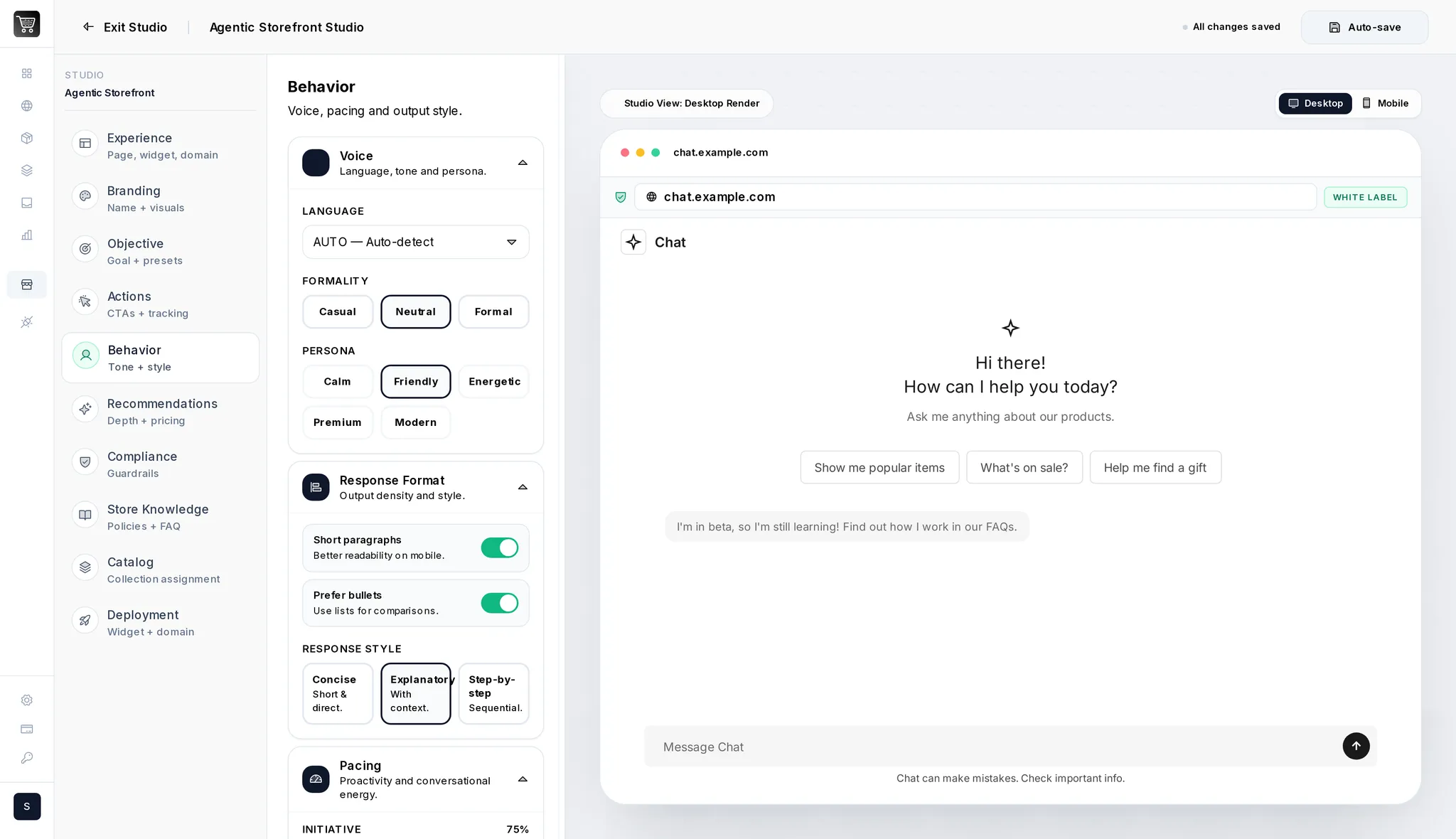
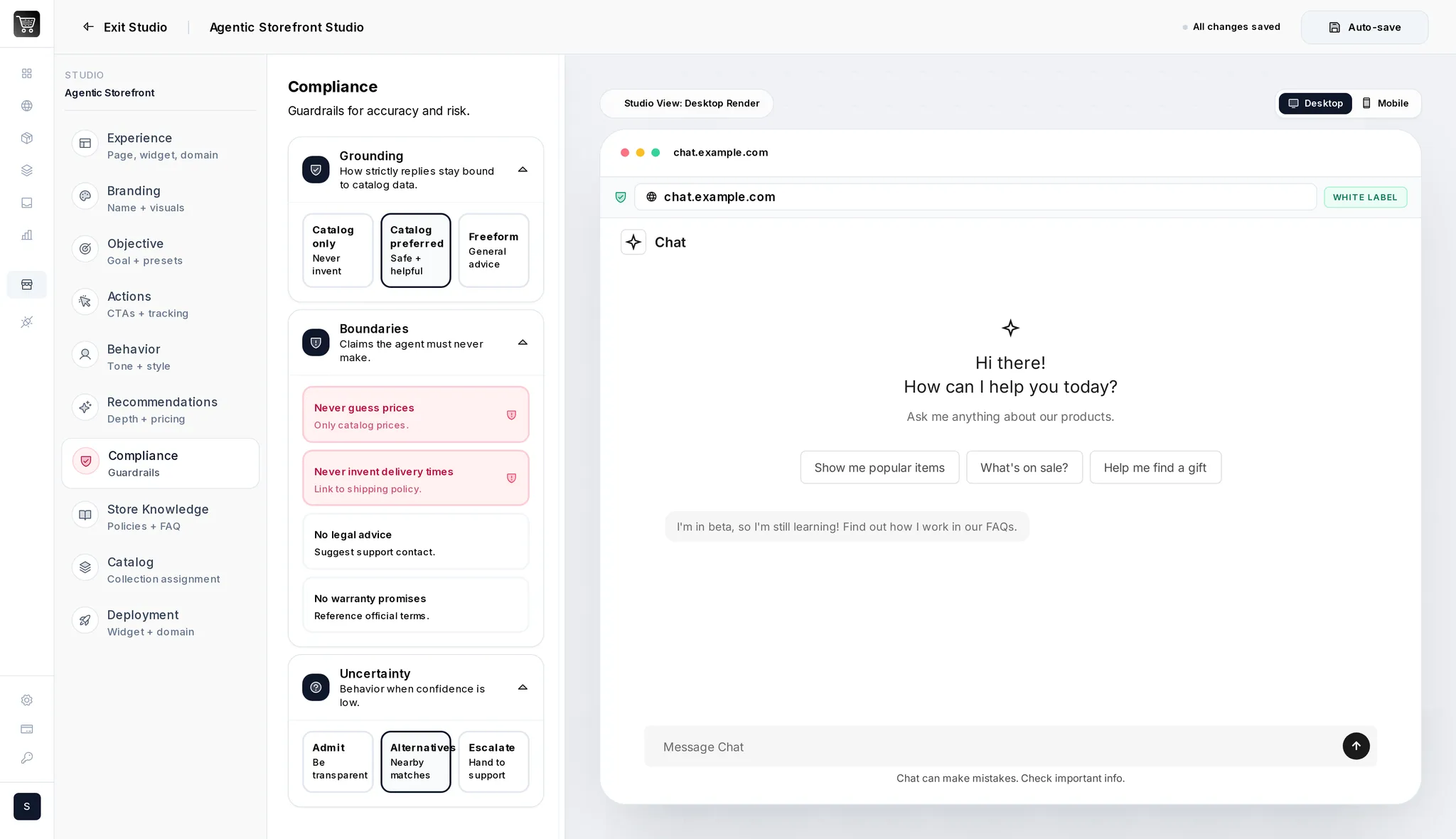
These are the real product: a hosted storefront answering a shopper, the Studio, the reporting. Click any of them to see the feature it belongs to.
Billed per "billable conversation", counted once a human replies, with the Lyro AI agent on its own separate quota. Checked August 2026 on their pricing page. More conversations means more cost: the right incentive for deflection, the wrong one for selling.
A flat monthly price with a generous interaction allowance. One meter, not two.
A store with 500 shopper conversations watches two meters on Tidio. Here it is one allowance inside your plan, so more questions never costs more.
Tidio is a support product, and a well-built one. Ticketing, macros, agent handover and a shared inbox across email, Instagram and WhatsApp are its job. The two sit on different halves of the shopping trip, which is why plenty of stores run both: Tidio for the post-purchase inbox, AgenticCart for the pre-purchase conversation.
AgenticCart is built for the pre-purchase conversation: helping a shopper choose, and turning that choice into an order. Support tooling keeps the inbox afterwards, which is why plenty of stores run both and let each do the half it is good at.
Yes, and many stores should. They do different jobs: AgenticCart handles the pre-purchase conversation on your storefront, a helpdesk handles the post-purchase inbox. They do not conflict.
No. The difference is what sits behind the conversation. AgenticCart syncs your catalog, embeds it for semantic search, and answers from real product data with cards, price and availability. A support bot answers from documents you wrote and have to keep updating.
Lyro is built to resolve support questions and is measured on resolution rate. That is a different target from recommending the right product to a shopper who has not decided yet.
No. AgenticCart connects to your existing Shopify or WooCommerce store and reads your real catalog. Your store, checkout and customer data stay where they are.
A flat monthly price per plan with an interaction allowance, and a 7-day free trial. No per-conversation billing and no separate AI quota.
This page argues the selling half. If what you actually need is support tooling - tickets, macros, a shared inbox - these are the honest picks, checked August 2026 on their own pages.
Tickets, macros, order actions - the ecommerce-native support pick.
Our honest comparison →Queues, SLAs, voice, workforce management - the step up in scale.
Our honest comparison →Autonomous resolution, billed per resolution - strongest where deflection is the whole goal.
Our honest comparison →Free with Shopify, you answer personally - the honest starting point.
Our honest comparison →Prefer the whole market at a glance? See the best AI agents for ecommerce, the best ecommerce chatbots, or start with what an AI storefront is.
See it on your own catalog
Connect your store and the agent answers questions about your own products in the browser. Most people decide right there.