Chatbase reads your docs. AgenticCart reads your catalog.
Chatbase turns your documents into an AI support agent for any website. AgenticCart turns your product catalog into a shopping agent for your store. The difference is not the model, it is what the model can see.
Most of this page is detail. If you only read one part, read this one.
Answers from whatever documents were uploaded. If the price changed last week and the document did not, it answers with the old price - confidently.
Reads the synced catalog: the variant, its price and availability as of the last catalog sync, returned as a product card the shopper can act on.
| AgenticCart | Chatbase | |
|---|---|---|
| What it is built for | ||
| Answers from your product catalog, not uploads | ||
| Recommendations as product cards with price | ||
| Variants, stock and price kept in structure | ||
| Answering from documents you wrote | Also supported via store info | |
| The selling surface | ||
| Runs as a full storefront on your own domain | ||
| Curated collections per agent | ||
| Catalog stays current without re-uploading | Re-upload and re-train | |
| Conversion and drop-off insight in shoppers' own words | ||
| Commercials | ||
| Pricing model | Flat monthly | Per message credit |
| Cost stays flat as shoppers ask more | ||
Checked against Chatbase's own public pages in August 2026. Found something out of date? Tell us and we will fix it.
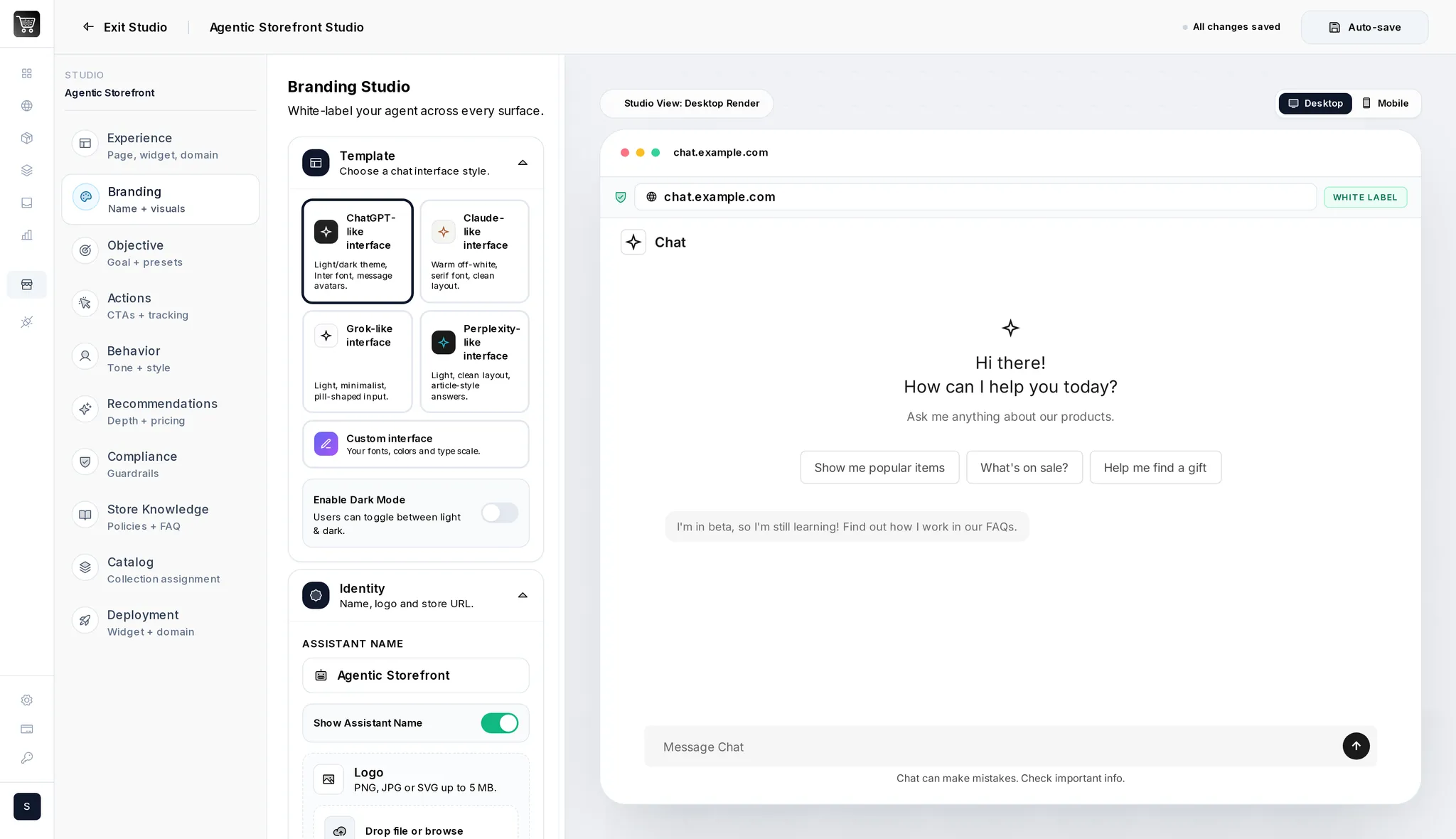
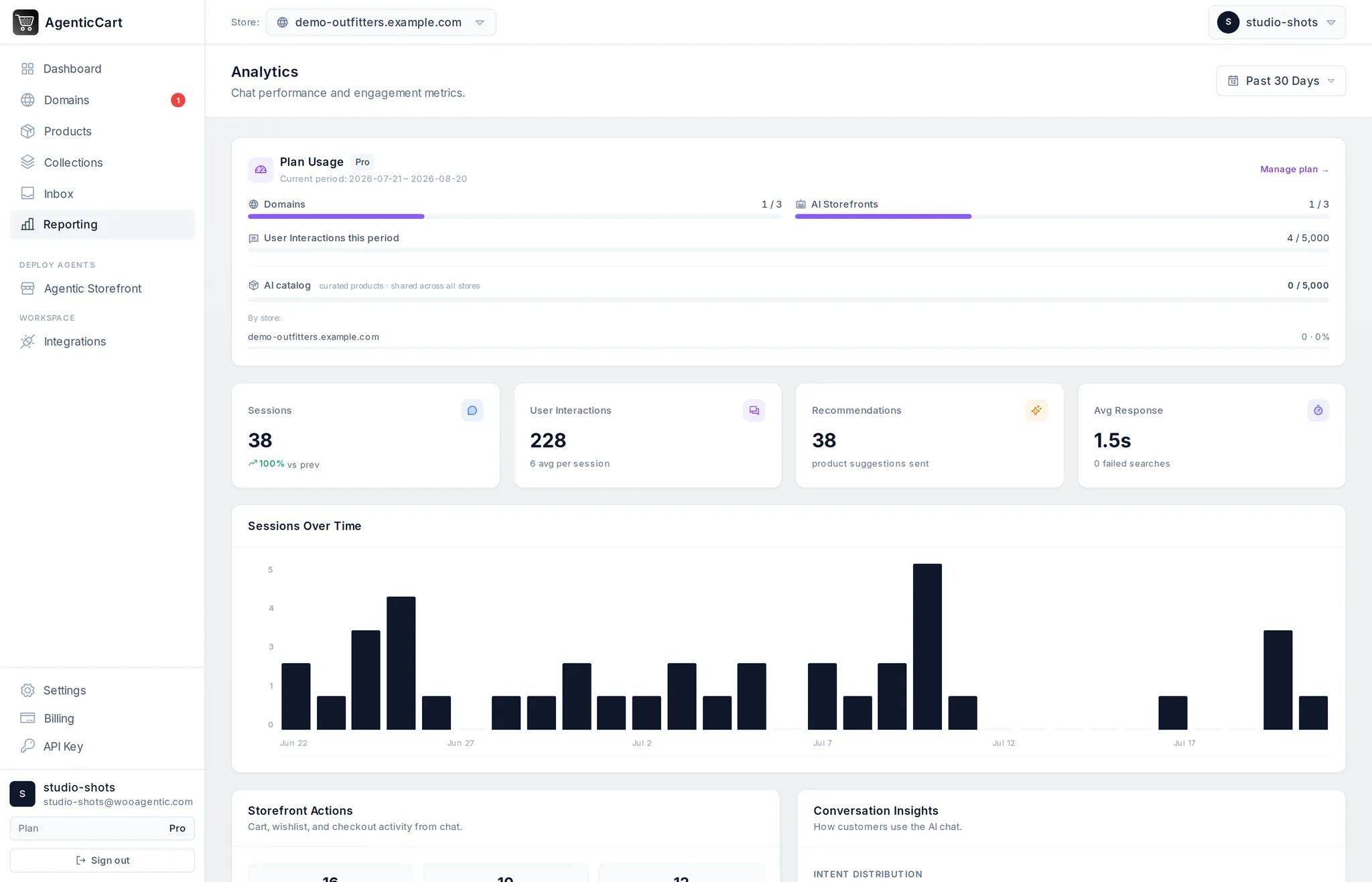
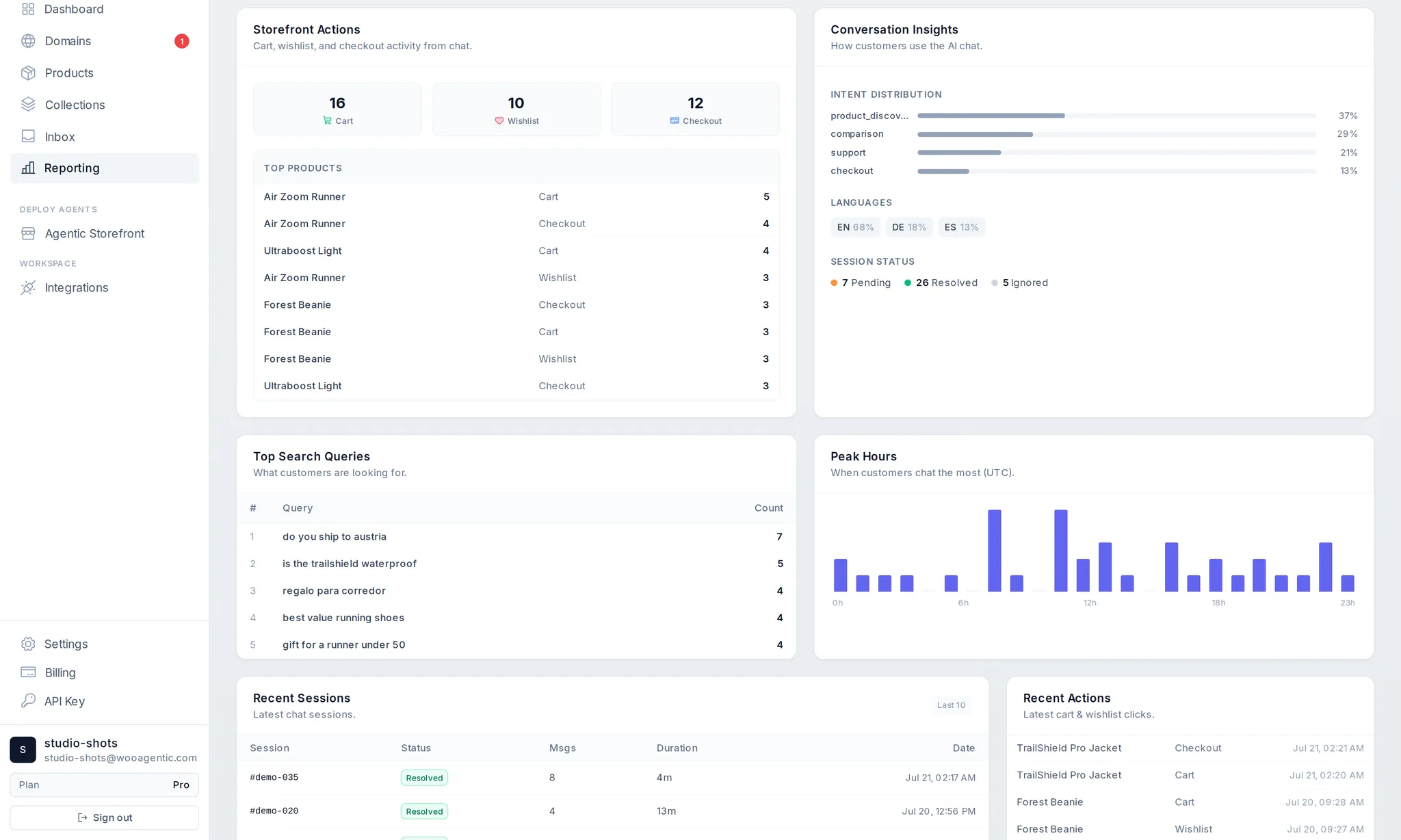
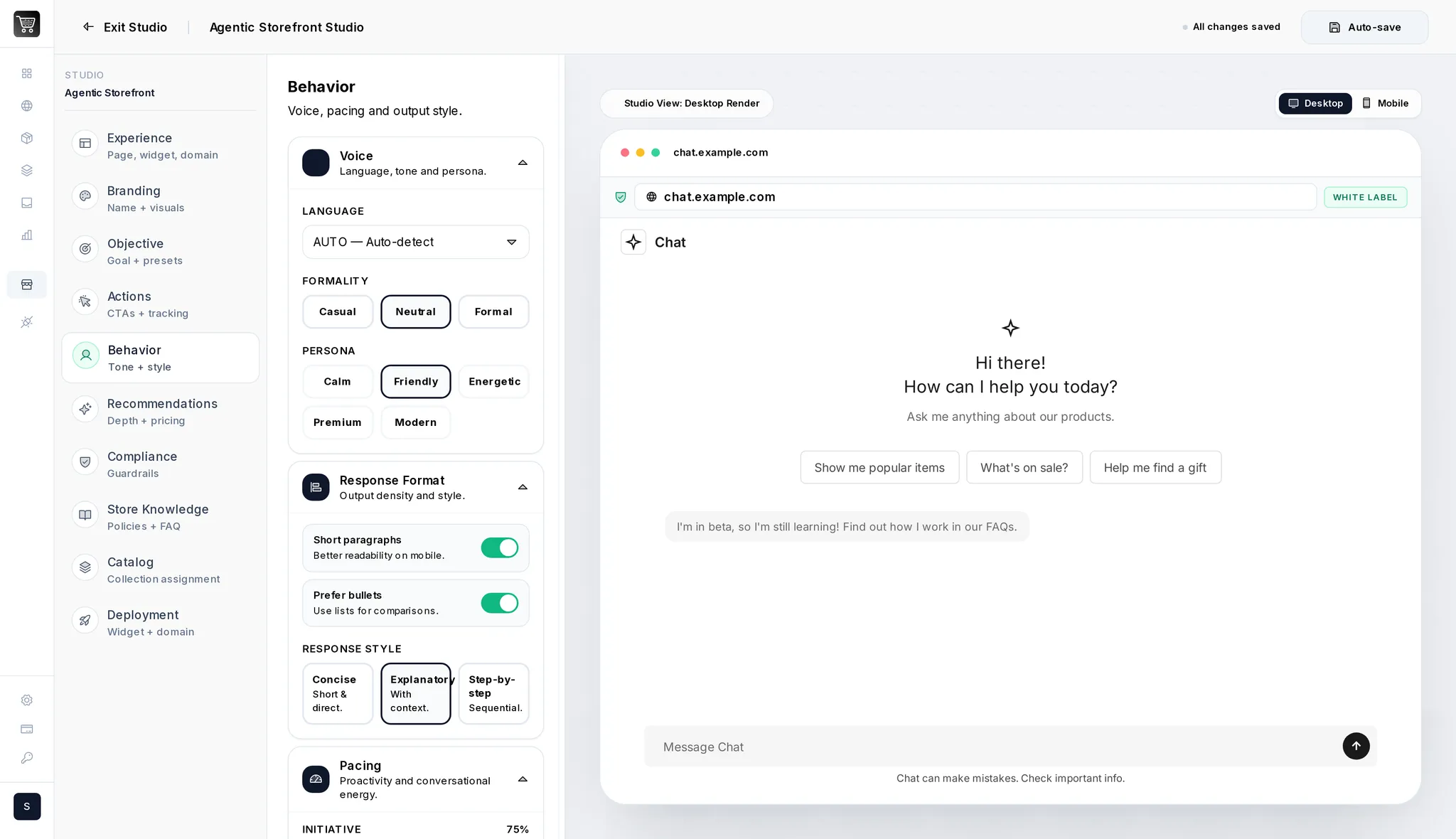
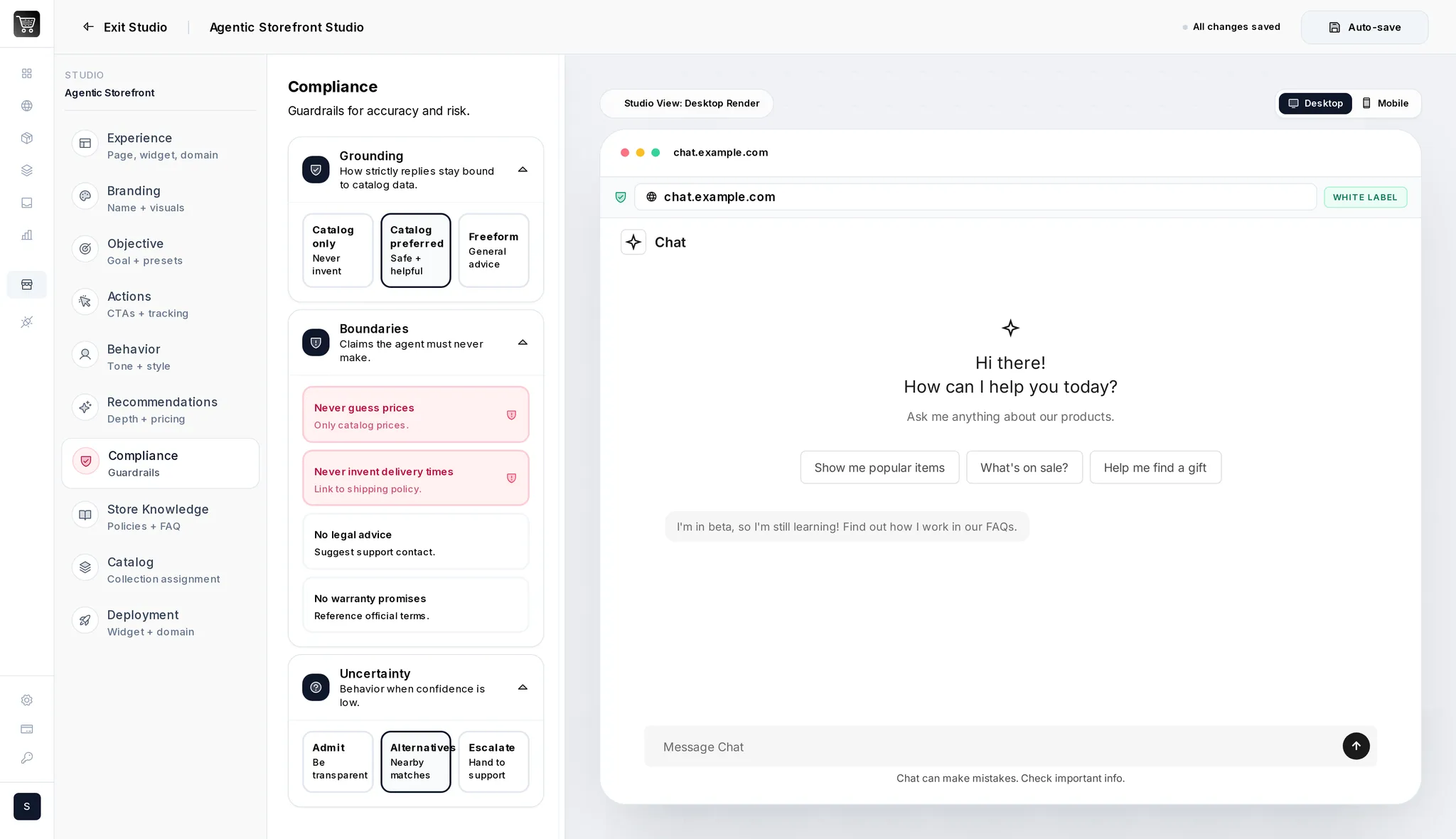
These are the real product: a hosted storefront answering a shopper, the Studio, the reporting. Click any of them to see the feature it belongs to.
Metered on message credits, with paid add-ons for extra agents and credit top-ups. Checked August 2026 on their pricing page. That fits support, where volume is a cost to contain. It fits selling badly.
A flat monthly price per plan with an interaction allowance.
Six questions before a purchase is normal. On credits that is six deductions; here it is one shopper inside your allowance.
Chatbase is a general-purpose support agent and does not claim to be an ecommerce product. Its strength is knowledge that lives in documents, and deployment across Slack, WhatsApp and email. If your problem is answering from a body of text rather than selling from a catalog, that is the tool for it.
AgenticCart works from your product catalog, so it is at its strongest when there is one to sync. Shopify, WooCommerce and product feeds all connect in a few minutes.
You can, and it will answer from that snapshot. The problem is the day after: prices change, products sell out, variants get added. A snapshot answers confidently with yesterday's truth, which is worse than not answering.
No. Connecting a store is self-serve and the catalog syncs on its own. There is nothing to train and nothing to re-upload.
Yes. Shipping, returns and store policies are part of what the agent knows, alongside the catalog.
The next catalog sync picks it up and the agent stops recommending it. Sync is something you run rather than something that happens per-change today, so keep it in mind around a big price or stock update.
If your bot's real job was customer support rather than selling, these are the honest picks - checked August 2026 on their own pages. For a docs bot outside ecommerce we have no horse in the race: Chatbase remains a strong choice there.
Mature SMB support tooling with humans in the loop, one inbox across channels.
Our honest comparison →If the store's bot questions are really order questions, a helpdesk with order actions beats a docs bot.
Our honest comparison →Document-grounded resolution at scale - the enterprise version of the docs-bot job.
Our honest comparison →Prefer the whole market at a glance? See the best AI agents for ecommerce, the best ecommerce chatbots, or start with what an AI storefront is.
See it on your own catalog
Connect your store and the agent answers questions about your own products in the browser. Most people decide right there.